
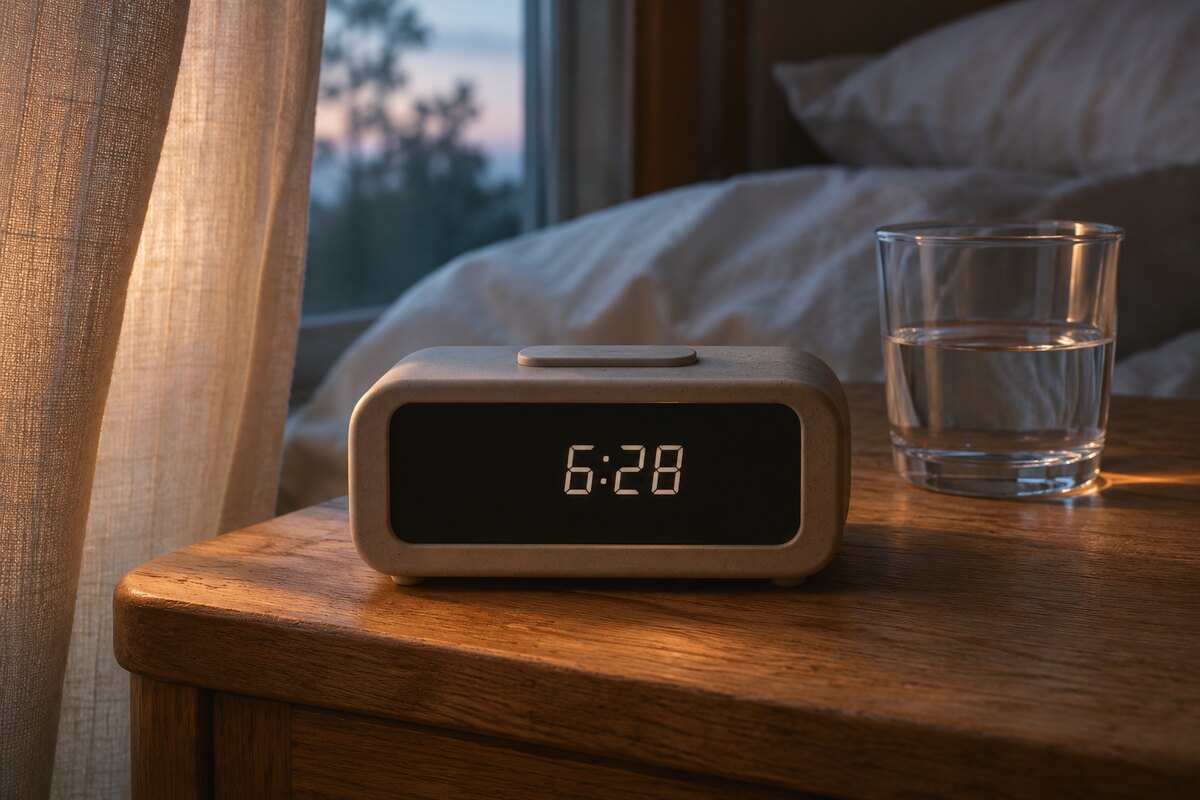
The alarm is set for 6:30. You open one eye and check the time. It’s 6:28. You reach over to switch it off before it wakes anyone else. Then you wonder how your body managed to do the one thing you set an alarm to make sure it would do.
Can Your Body Expect a Wake-Up Call?
Your body has an internal clock that runs on a roughly 24-hour rhythm. Light and darkness help keep it in sync with the day, so feeling ready to wake around your usual time makes sense. The more interesting question is what happens when you have to get up earlier than usual.
In a small German sleep study, researchers told some participants they’d be woken at 6 a.m. Others expected to sleep until 9 a.m. but got the same 6 a.m. wake-up call. Among those who expected the early start, levels of a hormone called ACTH began to rise about an hour before they were woken. The researchers didn’t see that same rise beforehand in the people taken by surprise. The study measured what happened while they were still asleep, leaving open the question of whether they would have woken on their own.
Why Does the Alarm Sometimes Leave You Foggy?
There’s a name for that stretch when your eyes are open and a simple question feels like a lot to ask. It’s called sleep inertia. For a while after waking, your thinking and reaction time can be slower.
Does hitting snooze help shake off the morning fog? In a small study of 31 people who regularly hit snooze, they did as well or better on thinking tests right after getting up when they’d had a chance to snooze. The surprising part? They didn’t report feeling noticeably less sleepy.
A clock can tell you exactly when the day is supposed to start. The next time you beat yours by two minutes, consider what the researchers saw in the lab. For the people expecting that 6 a.m. wake-up call, one sign their bodies were getting ready for morning appeared while they were still asleep.
Comments
Loading comments…